- Home
- About IEAC
- Accreditation
- University Accreditation
- College Accreditation
- Online Institution Accreditation
- School Accreditation
- University Recruitment Agency Accreditation
- Programmatic Accreditation
- Teacher/ Lecturer Accreditation
- Religious Institutes Accreditation
- Affiliate Accreditation
- Research Accreditation Candidacy Accreditation
- IEAC Membership
- Institutions Accredited
- Accreditation Process
- Contact Us Webinar Apply Now
Blog
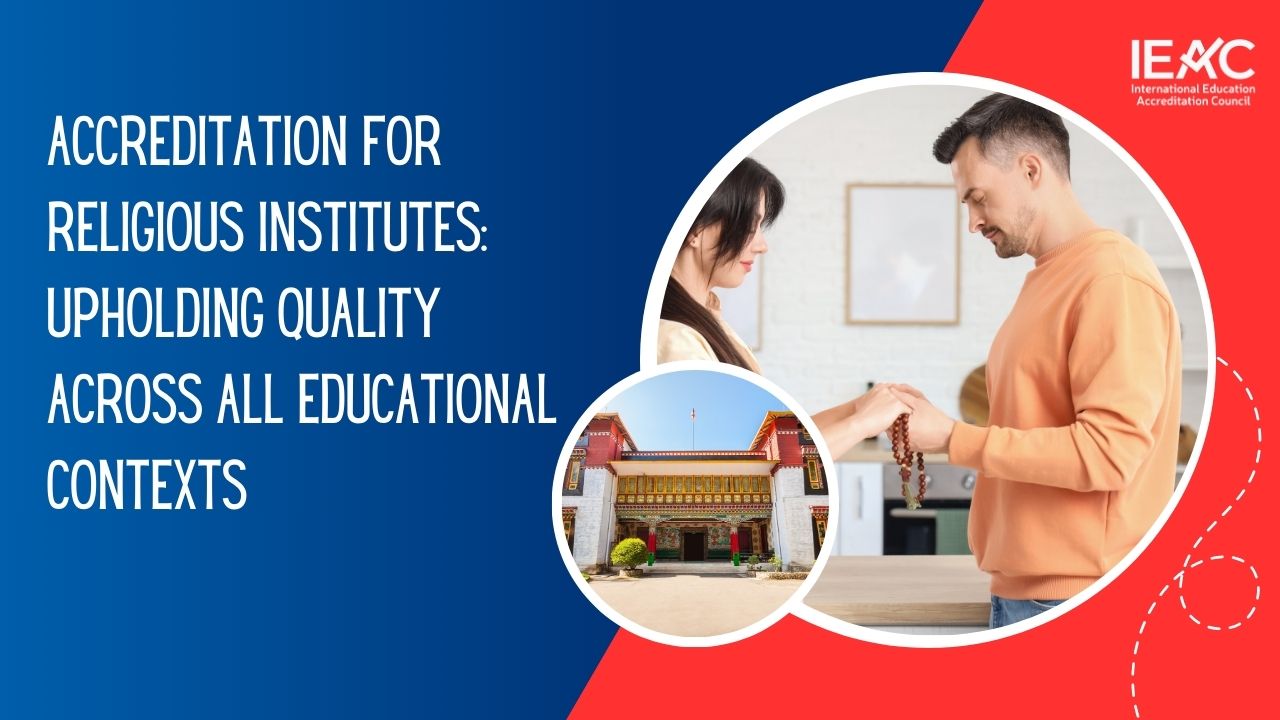
Accreditation for Religious Institutes: Upholding Quality Across All Educational Contexts
Lorem ipsum dolor sit amet, consectetur adipiscing elit, sed do eiusmod tempor incididunt ut labore et dolore magna aliqua. Quis ipsum suspendisse ultrices gravida. Risus commodo viverra maecenas accumsan lacus vel facilisis.
Accreditation for Religious Institutes: Upholding Quality Across All Educational Contexts
Accreditation is often associated with universities, schools, and professional training providers, but its importance extends far beyond mainstream education. Religious institutes, seminaries, theological colleges, faith-based training centers, and spiritual education institutions also require formal accreditation to ensure quality, structure, and global credibility.
In an era when learners, donors, and ministries expect educational excellence, accreditation serves as a trusted benchmark. It validates that programs meet rigorous standards, teaching is effective, governance is transparent, and graduates receive qualifications that are respected across communities and borders.
Accreditation safeguards the reputation of religious education and ensures that spiritual learning remains aligned with ethical, academic, and institutional best practices.
What Is Accreditation for Religious Institutes?
Accreditation for religious institutes is a comprehensive, externally validated quality assurance process through which institutions demonstrate that they meet defined standards of educational quality, governance, and institutional effectiveness.
These standards are typically aligned with internationally recognized frameworks such as the European Standards and Guidelines (ESG) for quality assurance and the requirements of the European Qualifications Framework (EQAR), the same benchmarks that guide IEAC’s wider accreditation activities.
Through accreditation, institutions undergo a structured review process that evaluates:
- Alignment of mission and educational purpose
- Academic integrity and curriculum relevance
- Doctrinal soundness in the context of the institution’s faith tradition
- Faculty qualifications, training, and continuous development
- Governance and administrative effectiveness
- Student support structures, pastoral care, and safeguarding
- Online and on-campus learning resources
- Ethical compliance and institutional transparency
Long-term sustainability and operational stability.
This process ensures that religious education is delivered responsibly, ethically, and in accordance with globally recognized expectations for higher education quality.
Why Accreditation Matters for Religious Institutes?
Accreditation ensures that religious institutes uphold recognized standards of educational quality, ethical governance, and institutional accountability. It strengthens credibility, supports student confidence, and reinforces the integrity of spiritual and academic training.
1. Strengthens Institutional Credibility and Public Trust
Faith-based institutions hold significant responsibility within their communities. Accreditation demonstrates that the institute is accountable, transparent, and committed to upholding high-quality educational practices. For students, parents, ministries, and partner organizations, it serves as a clear assurance that the institution adheres to recognized quality benchmarks and meets standards aligned with international expectations.
Accreditation distinguishes reputable institutes from unregulated or non-recognized providers and reinforces confidence in the qualifications awarded.
2. Ensures Academic and Theological Quality
Accreditation provides a structured framework for evaluating academic and theological integrity. Institutions must demonstrate that their curriculum is coherent, up-to-date, and reflective of current scholarship. This process requires:
- Well-designed programs with clear learning outcomes
- Integration of theological, ethical, and ministerial dimensions
- Adherence to doctrinal consistency
- Systematic assessment methodologies
- Teaching delivered by qualified faculty
Quality assurance ensures that students receive education that is academically robust and spiritually meaningful. It also encourages curriculum review cycles that allow institutions to adapt to emerging needs within religious communities and society.
3. Enhances Student Confidence and Professional Pathways
Students increasingly seek credentials that hold academic and professional value. Accreditation enhances the credibility of qualifications, enabling them to be recognized by ministries, faith organizations, academic institutions, and global networks.
For graduates pursuing roles in pastoral leadership, chaplaincy, religious education, counseling, or community service, accredited programs provide stronger legitimacy and broader opportunities for recognition. Accreditation also supports mobility through credit transfers or progression into further study.
4. Ensures Ethical Governance and Institutional Accountability
A core component of accreditation is the evaluation of governance and institutional management. Religious institutes must demonstrate:
- Transparent leadership and decision-making structures
- Ethical financial management
- Fair and equitable policies for admissions, assessment, and staff development
- Compliance with legal and safeguarding expectations
- Responsible stewardship of institutional resources
This accountability ensures that institutional values, administrative behavior, and educational practices are aligned.
5. Facilitates International Recognition and Collaboration
Accredited religious institutes are better positioned to engage in cross-border collaborations, participate in global theological networks, and establish partnerships with academic or ministry organizations.
Accreditation fosters opportunities for:
- Dual or joint programs
- Faculty and student exchanges
- Collaborative research
- Membership in international quality networks
- Recognition of qualifications across regions
This global orientation strengthens the institute’s ability to serve diverse communities and operate within an interconnected educational landscape.
6. Supports Continuous Improvement and Institutional Growth
Accreditation is not a one-time event. Institutions undergo periodic evaluations, fostering a culture of reflection and improvement. This ongoing cycle encourages:
- Curriculum enhancement
- Faculty development initiatives
- Modernization of learning environments
- Upgrades in online delivery and digital learning
- Development of updated policies and procedures
- Improvements in student support services
Through continuous improvement, religious institutes remain responsive to evolving educational needs, societal changes, and global best practices.
7. Protects the Integrity of Religious Education
The rise of unregulated online theological programs highlights the importance of external oversight. Accreditation helps preserve the authenticity, ethical delivery, and doctrinal reliability of religious education.
It ensures that institutions are:
- Adhering to their stated mission and faith tradition
- Providing instruction based on recognized theological scholarship
- Preventing misinterpretation or misuse of religious teachings
- Ensuring student welfare through safeguarding and pastoral support
- Operating with accountability to their community and stakeholders
This protects both learners and the wider religious community.
Types of Accreditation Relevant to Religious Institutes
Different forms of accreditation address the diverse functions of religious institutions, from safeguarding doctrinal consistency to validating academic rigor and program-specific quality. Understanding these types helps institutes align their offerings with global expectations and best practices.
1. Faith-Based or Religious Accreditation
Focuses specifically on the institute’s theological integrity, ministerial readiness, and alignment with its spiritual tradition. This ensures teaching remains doctrinally consistent while meeting educational expectations.
2. Academic or Institutional Accreditation
Assesses the institution as a whole, covering leadership, governance, quality assurance systems, academic integrity, and resource adequacy. This is essential for broader recognition and comparability across borders.
3. Programmatic Accreditation
Evaluates specific programs such as Theology, Biblical Studies, Divinity, Pastoral Counseling, or Ministry Leadership. This ensures that individual academic offerings meet high standards of rigor and relevance.
Key Areas Evaluated During Accreditation
Accrediting bodies typically review:
- Institutional mission, values, and strategic alignment
- Leadership and governance structures
- Curriculum design, review, and assessment practices
- Faculty qualifications and scholarly engagement
- Student services, pastoral support, and safeguarding policies
- Learning resources and digital access
- Operational sustainability and financial integrity
- Compliance with national regulations and international frameworks
- Outcomes-based performance indicators
These criteria ensure that institutions maintain consistent quality and fulfil their educational mandate responsibly.
Final Thoughts
Accreditation is not merely a bureaucratic requirement, it is a vital foundation for excellence, credibility, and impact in religious education. Whether training future pastors, chaplains, missionaries, educators, or spiritual leaders, accredited religious institutes demonstrate that they value quality, integrity, and lifelong learning.
By adopting accreditation standards, religious institutions honor their spiritual mission while providing students with education that is respected, recognized, and relevant across all educational contexts.
Frequently Asked Questions (FAQs)
1. Why do religious institutes need accreditation?
Accreditation ensures that religious institutes meet recognized standards of quality, governance, academic rigor, and ethical practice. It strengthens credibility and provides assurance to learners, communities, and partner organizations.
2. How does accreditation improve the quality of theological or ministerial programs?
It promotes structured curriculum design, qualified faculty, sound assessment methods, and doctrinal integrity. Through regular reviews, institutions maintain relevant, accurate, and academically robust programs.
3. Are accredited religious institutes more widely recognized internationally?
Yes. Accreditation aligned with global frameworks, such as ESG and EQAR, supports international comparability, enabling smoother collaboration, credit recognition, and mobility for students and graduates.
4. What areas are reviewed during accreditation for religious institutions?
Typical evaluations include governance, curriculum quality, faculty qualifications, safeguarding and student support, learning resources, institutional mission alignment, and operational sustainability.
5. Does accreditation affect students’ future pathways?
Accredited qualifications are more likely to be respected by ministries, educational institutions, and employers. This enhances opportunities in pastoral work, teaching, community leadership, and further academic study.
6. How often must religious institutes renew accreditation?
Accreditation operates on a cyclical basis. Institutions undergo periodic evaluations to demonstrate ongoing compliance and continuous improvement, ensuring long-term quality and relevance.
7. What is the difference between faith-based and academic accreditation?
Faith-based accreditation focuses on doctrinal soundness and ministerial formation, while academic accreditation evaluates broader educational standards, governance, and institutional effectiveness.
8. Can online religious programs receive accreditation?
Yes. Online religious programs can be accredited if they meet required standards for digital delivery, instructional quality, student support, and secure assessment practices.
9. How does accreditation protect the integrity of religious education?
It prevents the spread of unregulated or low-quality programs, ensuring theological accuracy, ethical delivery, and responsible stewardship of educational and spiritual values.
10. Does accreditation require an institution to change its faith tradition?
No. Accreditation respects institutional identity. It ensures quality without altering theological positions or spiritual missions.
Faith Intact, Standards Met: A Practical Roadmap for Theological Colleges Pursuing Accreditation

15th October 2026

7th October 2026

29th September 2026

25th September 2026

17th September 2026

8th September 2026