- Home
- About IEAC
- Accreditation
- University Accreditation
- College Accreditation
- Online Institution Accreditation
- School Accreditation
- University Recruitment Agency Accreditation
- Programmatic Accreditation
- Teacher/ Lecturer Accreditation
- Religious Institutes Accreditation
- Affiliate Accreditation
- Research Accreditation Candidacy Accreditation
- IEAC Membership
- Institutions Accredited
- Accreditation Process
- Contact Us Webinar Apply Now
Blog
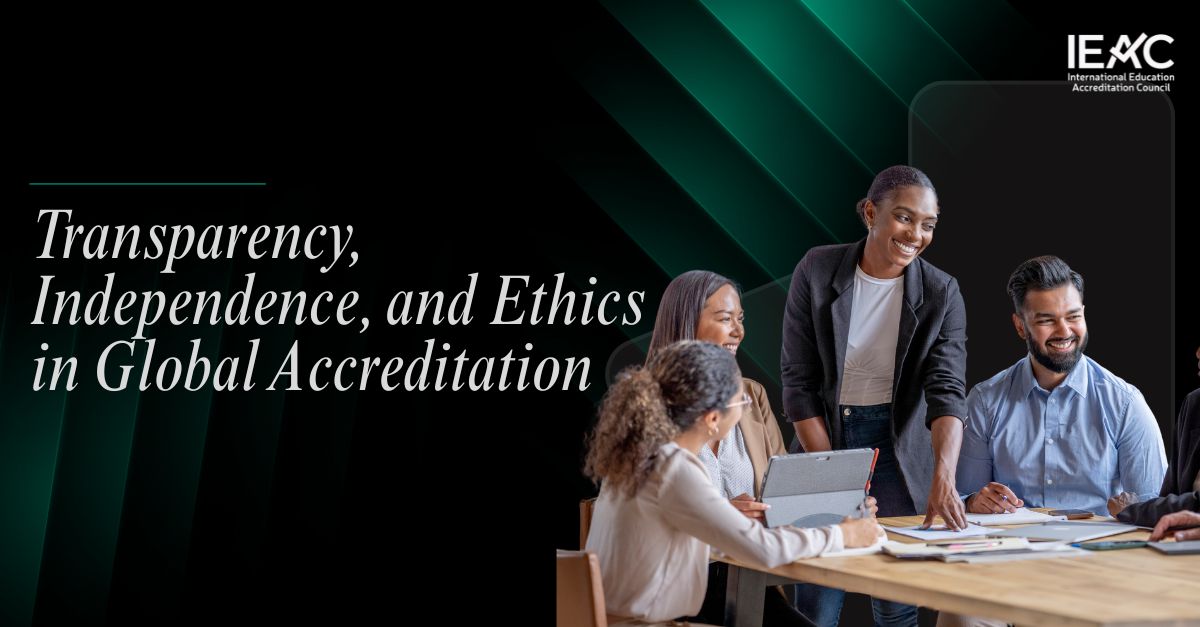
Transparency, Independence, and Ethics in Global Accreditation
Lorem ipsum dolor sit amet, consectetur adipiscing elit, sed do eiusmod tempor incididunt ut labore et dolore magna aliqua. Quis ipsum suspendisse ultrices gravida. Risus commodo viverra maecenas accumsan lacus vel facilisis.
Transparency, Independence, and Ethics in Global Accreditation
Why they matter more than ever…
In today’s organized education landscape, accreditation is no longer just a badge, it’s a trust signal. Students cross borders for education, institutions expand globally, and employers increasingly rely on accreditation status to judge quality. In this environment, how accreditation is conducted matters just as much as who conducts it.
Transparency, independence, and ethics are no longer optional ideals. They are the pillars that define a really globally recognised accreditation body.
The Trust Gap in Global Education
According to global education surveys, over 70% of students say accreditation influences their choice of institution, yet closely half admit they don’t fully understand how accreditation decisions are made. This gap creates doubt and, in some cases, misuse of the term “accredited.”
At the institutional level, the pressure is even higher. Universities and colleges operate in competitive environments where credibility directly affects student enrollment, international partnerships, and funding opportunities. When accreditation processes are unclear or biased, trust erodes quickly.
This is why transparency and ethical governance have become defining standards in modern accreditation systems.
Transparency: Clarity Builds Confidence
Transparency in accreditation means institutions evidently understand:
- What standards are being assessed
- How evaluations are conducted
- Why decisions are made
Data from higher education quality assurance networks shows that institutions are 35–40% more likely to re-engage with an accreditation body when evaluation criteria, timelines, and outcomes are openly communicated.
Transparent accreditation does not lower standards, it strengthens them. Clear frameworks encourage institutions to improve proactively rather than “prepare only for inspection.” It shifts accreditation from a one-time event to a continuous quality journey.
At IEAC, transparency is embedded through structured evaluation frameworks, documented processes, and clear communication at every stage, ensuring institutions know where they stand and how they can grow.
Independence: Credibility Depends On It
Independence is one of the most critical and scrutinized elements in global accreditation. Research in quality assurance consistently shows that accreditation bodies perceived as independent carry significantly higher credibility among governments, international universities, and employers. When reviewers are free from institutional, political, or commercial inf luence, decisions carry weight.
Independent accreditation safeguards:
- Objective assessments
- Fair peer review
- Consistent application of standards across regions
In fact, studies indicate that institutions accredited by independent bodies are up to 50% more likely to be accepted into international academic collaborations. A globally recognised accreditation body must not only claim independence, it must demonstrate it through governance structures, reviewer selection, and ethical safeguards.
Ethics: The Foundation of Global Recognition
Ethics in accreditation goes beyond compliance. It addresses fairness, accountability, and respect for diversity across educational systems.
- Are reviewers trained and accountable?
- Are conflicts of interest disclosed and managed?
- Are institutions treated equitably, regardless of size or geography?
Data from international education forums shows that ethical lapses in accreditation can reduce institutional credibility by over 60% in global rankings and partnerships. Ethical accreditation protects not only institutions, but also students, who invest time, money, and trust in educational systems. This is why ethical review processes, reviewer responsibility, and institutional integrity are non-negotiable in modern accreditation.
Looking Ahead: Accreditation as a Quality Partnership
Modern accreditation is moving away from a “pass or fail” mindset toward a collaborative quality enhancement model. Institutions today seek guidance, benchmarking, and global alignment, not just certification.
- Transparency empowers institutions to improve.
- Independence ensures fairness.
- Ethics sustain long-term credibility.
Together, they define accreditation that truly serves global education. At IEAC, these principles guide every evaluation, not as slogans, but as operational standards. Because in global education, trust is earned through process, not promises.
Beyond the Accreditation Badge: 5 Questions Every University Should Ask

8th September 2026

31st August 2026

26th August 2026

20th August 2026

12th August 2026
31st July 2026