- Home
- About IEAC
- Accreditation
- University Accreditation
- College Accreditation
- Online Institution Accreditation
- School Accreditation
- University Recruitment Agency Accreditation
- Programmatic Accreditation
- Teacher/ Lecturer Accreditation
- Religious Institutes Accreditation
- Affiliate Accreditation
- Research Accreditation Candidacy Accreditation
- IEAC Membership
- Institutions Accredited
- Accreditation Process
- Contact Us Webinar Apply Now
Blog
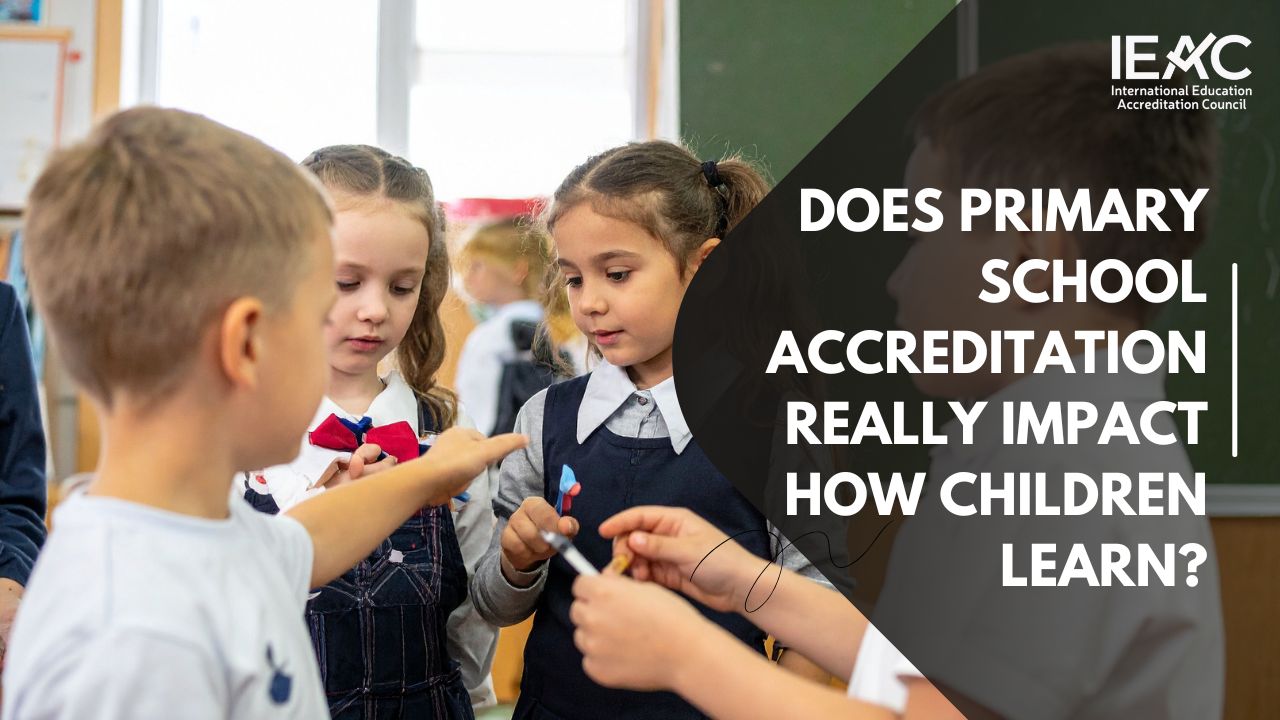
Does Primary School Accreditation Really Impact How Children Learn?
Lorem ipsum dolor sit amet, consectetur adipiscing elit, sed do eiusmod tempor incididunt ut labore et dolore magna aliqua. Quis ipsum suspendisse ultrices gravida. Risus commodo viverra maecenas accumsan lacus vel facilisis.
Does Primary School Accreditation Really Impact How Children Learn?
Parents today are not just looking for schools, they are looking for environments where children feel safe, supported, and genuinely understood. As expectations around early education grow, schools are increasingly evaluated not only on academic results but also on how well they nurture a child’s overall development.
This is where accreditation plays a quiet yet powerful role. When a school undergoes a formal review process, it is evaluated on teaching quality, learning environments, student welfare, and developmental outcomes. In fact, Primary School Accreditation acts as a structured framework that ensures learning remains child-focused rather than system-driven.
So how exactly does accreditation translate into better learning experiences for young children?
Let’s explore...
What Does Child-Centric Learning Really Mean?
Child-centric learning places the learner, not the curriculum, at the heart of education. It recognises that children learn differently, develop at different speeds, and thrive when teaching adapts to their needs rather than forcing uniform outcomes.
In a child-centric primary school, learning is:
• Age-appropriate and developmentally aligned
• Emotionally supportive and inclusive
• Flexible rather than rigid
• Focused on curiosity, creativity, and confidence
Accreditation frameworks help schools embed these principles consistently across classrooms and grade levels.
How Accreditation Shapes Teaching Practices in Primary Schools?
One of the most direct impacts of accreditation is on how teachers teach.
Accredited schools are required to:
• Follow structured lesson planning aligned with child development stages
• Use varied teaching strategies to support different learning styles
• Assess progress holistically, not just through exams
• Encourage active participation, play-based learning, and inquiry
This ensures that classrooms move away from rote instruction and toward meaningful, engaging learning experiences.
6 Ways Primary School Accreditation Ensures Child-Centric Learning
Primary school accreditation is not just about meeting benchmarks, it’s about shaping how children experience learning every single day. Here’s how accredited schools consistently place children at the centre of education.
1. Teaching Is Aligned with How Children Actually Learn
Accreditation requires schools to design teaching practices around child development, not rigid syllabi. This means lessons are paced appropriately, concepts are introduced gradually, and teaching methods adapt to different learning styles. Children are encouraged to explore, question, and participate, rather than memorise and repeat.
2. Curriculum Balances Academics with Emotional and Social Growth
Accredited primary schools are evaluated on more than academic content. Their curriculum must support emotional intelligence, communication skills, creativity, and collaboration. This balance ensures children don’t just learn what to think, but also how to interact, express themselves, and build confidence.
3. Classrooms Are Designed to Be Safe, Inclusive, and Supportive
A child cannot learn effectively without feeling safe. Accreditation frameworks assess classroom environments, safeguarding policies, inclusion practices, and teacher awareness of child well-being. As a result, accredited schools actively create spaces where children feel respected, heard, and protected, especially those with diverse learning needs.
4. Teachers Are Trained to Respond to Individual Needs
Accreditation places strong emphasis on teacher quality and continuous professional development. Teachers are trained to observe learning patterns, identify challenges early, and adjust instruction accordingly. This ensures children are supported as individuals—not compared or pushed into one-size-fits-all expectations.
5. Assessment Focuses on Progress, Not Pressure
In child-centric accredited schools, assessment is used as a tool for growth, not fear. Teachers rely on observations, formative feedback, and developmental tracking rather than constant testing. This approach helps children build self-esteem, stay motivated, and learn without anxiety or unnecessary competition.
6. Parents Become Active Partners in Learning
Accreditation encourages transparency and clear communication between schools and families. Parents are kept informed about teaching approaches, learning goals, and student progress. When parents understand how and why their child is learning, it creates a strong support system that reinforces development both at school and at home.
Why Does Accreditation Matter More Than Ever in Early Education?
In an era where early learning shapes long-term outcomes, accreditation serves as a safeguard against poor practices and inconsistent standards. It ensures that schools do not prioritise results over readiness, or structure over sensitivity.By aligning teaching, curriculum, assessment, and care under one quality framework, accreditation creates learning spaces where children can thrive naturally and confidently.
Final Thoughts
Child-centric learning does not happen by chance, it is the result of intentional systems, trained educators, and accountable school practices. When schools commit to recognised quality standards, they create environments where children are supported academically, emotionally, and socially. This is why Primary School Accreditation plays such a critical role in shaping meaningful, development-focused learning experiences during the most formative years of education.
FAQs:
1. What is primary school accreditation?
Primary school accreditation is a quality assurance process that evaluates whether a school meets established standards in teaching, curriculum, student welfare, and learning outcomes.
2. How does accreditation support child-centric learning?
Accreditation ensures teaching practices, curriculum design, and assessment methods are aligned with children’s developmental, emotional, and learning needs.
3. Is accreditation mandatory for primary schools?
In many regions, accreditation is voluntary, but it is widely recognised as a marker of quality and accountability in primary education.
4. Does accreditation improve teaching quality?
Yes. Accreditation requires schools to maintain trained educators, structured teaching practices, and ongoing professional development.
5. How are students assessed in accredited primary schools?
Accredited schools often use balanced assessments that focus on progress, feedback, and development rather than exam pressure.
6. Why should parents consider accreditation when choosing a primary school?
Accreditation gives parents confidence that a school follows recognised quality standards and prioritises children’s overall growth and well-being.
7. Does accreditation ensure safe learning environments for children?
Yes. Safeguarding, inclusion, and student welfare are key components evaluated during the accreditation process.
8. How often are accredited schools reviewed?
Accredited schools typically undergo periodic reviews to ensure continued compliance and improvement.
Growth Is Exciting. Is Your Quality Keeping Pace?

17th September 2026

8th September 2026

31st August 2026

26th August 2026

20th August 2026

12th August 2026